Listening Books for Builders: Learn Money While Your Hands Are Busy
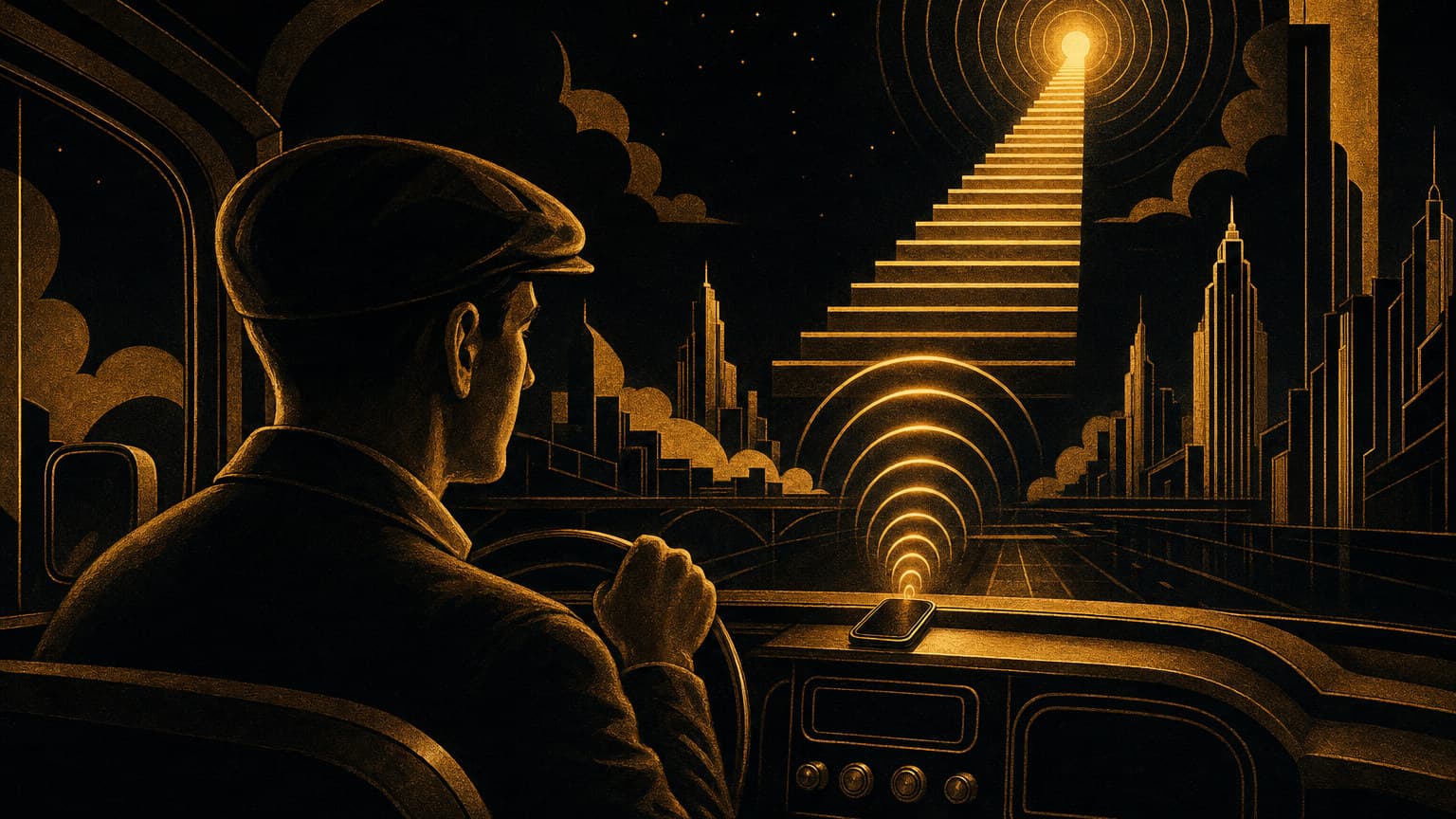
You haven't finished a book since school and you're not going to start now. Fair enough. Nobody who's up at six and on site by seven has an hour spare to sit in a chair with a paperback. But you've got a drive to the merchant's, a wait for a delivery, and forty minutes of loading a van that don't ask anything of your eyes. That's not dead time. That's where a listening book lives.
The trade doesn't hate reading, it hates sitting still
Nobody on the tools has anything against learning. What they hate is the demand that comes with a normal book: sit down, hold it open, focus your eyes on it, do nothing else for an hour. After a day of physical work, that's not a rest, it's a second job. So the book stays on the shelf, the good intention dies by Wednesday, and the business side of the business never gets learned.
A listening book removes the one demand that was actually killing it. Your eyes are free. Your hands can be on a wheel, a broom, a drill. The learning slots into a body that's already moving instead of asking it to stop.
This isn't a knock on reading. It's a fact about who's actually asking you to learn the money side of the trade. Nobody handed you a quiet office and a lunch hour to sit and study invoicing law. You learned the trade with your hands because that's how the trade gets learned. It makes sense that the business side of it should be learnable the same way, on the move, not from a chair you don't have time to sit in.
The hours you already have
Count them honestly. The drive to site and back. The wait in the yard for a delivery that's running late. The walk to the skip and back with a barrow. The last twenty minutes before you fall asleep, phone in hand, too tired to read a screen but not too tired to listen. None of that is time you have to find. It's time you already own and currently hand over to the radio or nothing at all.
That adds up to real hours across a working week, and it's the same stretch of hours every tradesman already has, whether he uses them or not. The only question is what fills them.
Add it up for your own week, not mine. The drive, the wait, the loading, the last stretch before sleep. You'll find more than you expect, because you've never once counted it as time before. You've always treated it as the gap between the jobs that actually mattered, when it was sitting there the whole time, doing nothing.
A paperback needs a chair. A listening book needs an earbud
Here's the practical difference, and it's the whole reason this format works for a trade and not just an office. A paperback needs your eyes, your hands, and a place to sit still. A listening book needs one earbud and a phone in your pocket. You can start it in the van, pause it when a call comes in, and pick it back up on the walk from the truck to the front door. It doesn't compete with your day. It rides inside it.
That's not a small difference. It's the difference between a habit that survives a busy fortnight and one that dies the first time the diary fills up.
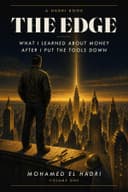
Why THE EDGE was built to be heard
I wrote THE EDGE as a listening book on purpose, not as a paperback someone recorded afterwards. Twenty-four chapters across five parts, each one built to stand on its own, so you can stop at the end of a chapter when you reach the job and pick the next one up whenever the same problem shows up again in your week. It runs on ElevenReader, the app from ElevenLabs, and I've laid out exactly how to open it in THE EDGE on ElevenReader. The opening chapters are free. The full book is $4.99.
Two firms, same town, same prices. Ten years later one owner is a millionaire and the other is still chasing invoices.
That's the question the book answers, and the answer was never going to fit on a poster. It needed the two hours it takes to actually explain the float, the payment rules, and why one of those two owners stopped being the bottleneck in his own business while the other never did. I go through what's in each part in THE EDGE by Mo El Hadri: the listening book for people who put the tools down.
What you actually get before paying anything
No trial card, no sign-up form beyond what ElevenReader itself asks for. Here's what starting tonight looks like:
- Open the ElevenReader link on your phone.
- Tap play on the opening chapters, free.
- Listen on the drive home instead of the radio.
- Decide after the free chapters whether you want the rest for $4.99.
Four steps. You could be listening to chapter one before the kettle's boiled.
This isn't about finding willpower
Most business advice for tradesmen assumes you've got an evening free and the discipline to use it on a book instead of the sofa. You don't, and pretending otherwise is why most of it never gets read. The whole point of a listening book is that it doesn't ask for willpower. It asks for an earbud and a drive you were making anyway. The habit survives because it was never fighting your day in the first place, it was hiding inside it.
Every failed New Year's resolution to "read more" died the same death: it needed a new hour, and none of us have a spare one lying around. The fix was never more discipline. It was putting the learning inside an hour that already existed and was already going to waste on the radio anyway.
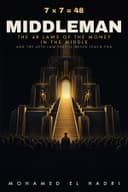
That's the same logic behind everything on this site. MIDDLEMAN makes the same case in forty-eight laws: stop trying to add hours you don't have, and start using the position you're already standing in. THE EDGE just applies it to the hours already sitting in your van.
Where to go next
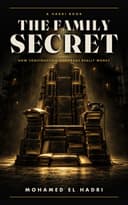
If you want the wider argument for why owning the doorway beats selling your hours at all, read how the rich get richer. If you want the forty-eight laws on how the money in the middle actually moves, start with MIDDLEMAN. And if the deeper story behind families who get richer without lifting a tool is what you're after, the launch list for The Family Secret is where that gets told.
You've got a drive to site in the morning. Start the free chapters of THE EDGE on ElevenReader tonight and let it run instead of the radio.
Want the whole staircase?
Three books by Mohamed El Hadri. Start anywhere. Climb in order.