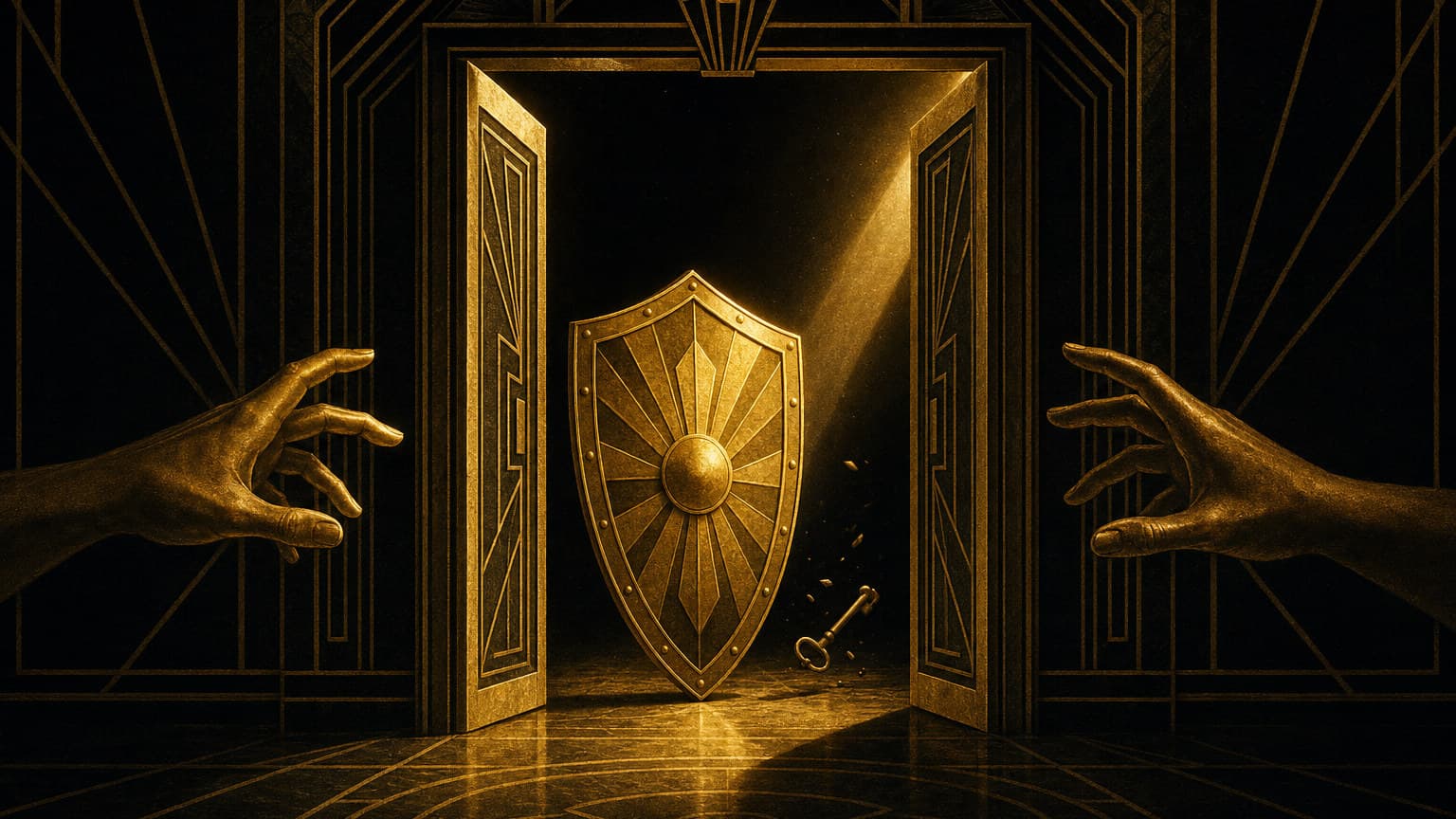
How Do You Make Cutting Out the Middleman a Downgrade?

How to avoid being cut out as a middleman: stop trying to trap the customer in, and start making the exit a downgrade. That's Law 17 of MIDDLEMAN, 7 x 7 = 48, "Make Going Around You a Downgrade" (read the full law), and it's the law that decides whether the doorway you built is actually yours, or just a favour you did two strangers once.
The moment it happens
It starts small. The client gets friendly with your subbie on site. Or the supplier mentions, in passing, what they'd charge if the client rang direct. Either way, the thought lands in someone's head: why am I paying this middleman at all? Law 9 says never let the two sides shake hands without you, and that's the right instinct. But you can't physically stop two adults talking. You can't chain a client to your number. The moment you try to lock the door, you look exactly like what people already suspect a middleman is: dead weight, charging for nothing.
So locking the door is the wrong move entirely. The right move is older and simpler. Make the door not worth walking round.
You can't trap people. You can only make leaving cost more than staying.
Here's the thing about a client who goes direct. They don't save money. They save your invoice, and they pick up everything that was hiding behind it. The guarantee goes. The one phone number goes. "Sorted by Friday" goes. What replaces it is their own Saturday, spent chasing a sparky who isn't answering.
The buyer who goes direct loses your speed, your guarantee, your single point of contact, your whole network of backups. Once going around you is a downgrade, the door stays shut on its own, and you never have to hold it.
That's the whole law in one line. You're not building a lock. You're building a comparison that favours you every time someone does the maths.
What actually makes the exit worse
Run through what a client gives up the day they cut you out:
- No guarantee. Nobody stands behind the job if it goes wrong.
- No one phone number. Instead of one call, they now manage three trades, three invoices, three excuses.
- No speed. You pick up today. A stranger found on a search engine might call back Thursday.
- No backup. Your subbie's off sick, you send another. Their new direct contact is off sick, the job stops.
- No one to blame. Your margin bought them someone. Theirs bought nothing.
Strip any one of those out of your business and the client's maths changes in their favour. Keep all of them standing and there's no version of going direct that looks smart by Friday.
Why the guarantee is the hard one to copy
Of all the things on that list, the guarantee is the one a stranger off a search engine cannot fake. Anyone can quote a lower day rate. Nobody can quote ten years of turning up, because they haven't done it yet. The guarantee isn't a line on the invoice, it's the proof that if the job goes wrong at 9pm on a Friday, there's a name attached to fixing it rather than a phone that rings out.
That's why the guarantee has to be real, not printed. A guarantee nobody has ever had to cash in is just a word. The client needs to have seen you make good on something, once, before they'll believe it's worth paying for. Which means the moat isn't built in the pitch. It's built the first time something breaks and you turn up anyway.
The downgrade starts before anyone thinks about leaving
By the time a client is seriously weighing up going direct, you're already defending, not building. The work has to happen earlier than that, quietly, as the normal way you operate rather than a reaction to a threat.
That means the backup trade is lined up before the first one ever calls in sick. It means the one phone number answers on the second ring, not the fifth. It means the guarantee is something you've said out loud, not something you hope they assume. None of this is expensive. All of it is the difference between a client who never considers leaving and one who's quietly pricing it up in their head.
Price is the wrong fight
Most middlemen panic about this law the wrong way. They think the answer is to shave the margin so thin that going direct barely saves anything. That's a losing game. There's always a number low enough to tempt someone, and racing it to zero just means you worked for nothing.
The client isn't doing sums on your margin. They're doing sums on their own risk. Whoever owns the customer owns the deal, and the thing that keeps you owning it isn't a cheaper number, it's being the one who absorbs the problem when it goes wrong. Nobody prices that properly until the day they need it, and by then you're already the one holding the guarantee, not the stranger they found instead.
What I built this on
When I ran a property maintenance company working with housing associations and letting agents, the subbies did the physical work. What I sold was never the lowest number on the quote. It was the thing a client never thinks to ask for until the roof's already leaking at 9pm: one number to call, one person who picks up, one name on the job whatever goes wrong. That's not a discount. That's the whole reason to keep paying me instead of ringing round for quotes.
Build it before you need it
This law doesn't fire the day a client threatens to go direct. By then it's too late to retrofit a guarantee. Build the things above into the business from day one, quietly, as standard practice, and the question of cutting you out never even gets asked, because there's nothing left to compare.
Where to go next
Law 9 is the law that stops the two sides meeting in the first place. This one is what happens if they meet anyway, and why it still doesn't matter. Read both, then walk the rest of the climb at the 48 laws.
If you want the mechanics behind why one operator keeps a client for ten years and the other loses one in ten months, that's THE EDGE: the float, the payment law, and the stuff nobody puts in a quote. First chapters are free. Start there tonight.
Want the whole staircase?
Three books by Mohamed El Hadri. Start anywhere. Climb in order.