When Is a Middleman Just a Tax?

You take a cut of every job. What does the customer lose if they stop paying you? If they get the same work, the same speed and the same protection for less money, your cut buys them nothing.
You don't need to touch the tools to earn your cut. You need to solve something for the person paying it.
The line between a doorway and a toll booth
Every middleman stands in the same spot: between a buyer and a supplier, between a customer and the work. From the outside, the good one and the bad one look identical. Same spot, same cut, same invoice.
Look at what each one takes responsibility for. Law 21 says it straight: add real value, or you're just a tax. One middleman closes a gap - the two sides couldn't find each other, didn't trust each other, or neither one wanted to carry the risk if it went wrong. The other middleman just discovered the gap existed and jumped in the middle of it, adding nothing, taking a slice because nobody had got round to cutting him out yet.
The honest middleman makes both sides richer. The parasite just makes them poorer.
I built a property maintenance business in London on exactly this line, running a network of subcontractors for housing associations and letting agents. The job was never to find the cheapest trade. It was to be the name the client never had to think twice about.
Test one: would the deal survive without you?
Ask it straight. If you vanished tomorrow, would this exact deal still happen, on the same terms, with the same outcome? If yes, you're a tax. You were never the reason it worked. If the deal would fall apart, get worse, take longer, or carry more risk without you, you're adding value and you've earned the slice.
Don't call yourself indispensable until you can name what would go wrong without you. Run the test on yourself. The market runs it on you eventually, whether you ask or not.
Test two: can you say out loud what you do?
Tell the customer what your fee pays for: "I vet the trades, guarantee the finish, and I'm the one number you call if anything goes wrong." Then deliver what you promised. The sentence doesn't earn the fee. The work behind it does.
Buying the work for less than you sell it is the business. What earns the difference? Tell the customer who checks the work, who handles the complaint and who pays to put a bad job right. If all three answers are "you", what are they paying you for?
Test three: does the gap actually exist?
Some gaps are real. The customer needs a roofer they can trust. The roofer needs work without spending half the day chasing it. Find the trade. Check the work. Carry the cost when it fails. Those are jobs worth paying for.
Some gaps are fake. The two sides were five minutes and one phone call away from doing the deal direct, and you just happened to be standing in the five minutes. That's not a gap. That's a turnstile you built on a path people were already walking down. You can charge at a turnstile for a while. You can't charge there forever.
What makes your cut easy to remove
If your only protection is that the client hasn't questioned your fee, your position is weak. Give them a reason to keep paying. Answer the phone. Check the finish. Sort the complaint. Each job should leave them with something better to say about you than "he knows a bloke".
The client doesn't need a reason to cut out a tax. They just need an opening - a slow month, a mistake, a mate who knows a guy. The moment that opening appears, the tax is gone and nobody mourns it, because there was nothing there to miss. That's the whole mechanism behind Law 9: the two sides shake hands behind your back the second they realise they can.
A value-adding middleman doesn't need to hide the two sides from each other out of fear. He's not scared of the introduction because the introduction was never the whole job. The guarantee was the job. The one phone number was the job. Take those away and going direct means the client has to chase the trade and sort the faults themselves. That's the cost your fee needs to beat.
What your fee pays for
The customer may be able to find a trade and manage the job themselves. Your job is to make paying you worth more than doing it themselves.
- Matching: you find an available trade and check they're right for the job.
- Trust: your name on the job means something, so the customer doesn't have to vet a stranger off a flyer.
- Risk: if it goes wrong, it's your problem and your cost to fix, not theirs to chase.
- Speed: you answer the call and book the work before the customer has to chase.
- One face: the customer deals with you, not five different trades with five different excuses.
Your fee has to be worth the problem you take off their hands. Counting tasks won't tell you that - one costly problem solved can earn the whole cut, and three small favours might not. Skip all five and charge anyway, and you're not running a business. You're running a toll booth with a sell-by date.
The tax doesn't know it's a tax
It's easy to call yourself useful when you're the one collecting the fee. Most bad middlemen tell themselves a story about the value they add, and the story is just vague enough to survive in their own head. "I know the market." "I've got relationships." Fine - then name the relationship. Name the specific thing the client couldn't get without you.
If you can't name it, find out what the client actually keeps you for. You've got a habit the client hasn't broken yet. Run the three tests honestly, on yourself, before the market runs them on you. It's a far cheaper lesson coming from you than from a cancelled contract.
Where to go next
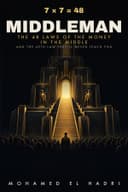
This is Law 21 of the forty-eight, on the Grip floor, where the book deals with making yourself impossible to cut out. Read the whole staircase, floor by floor, in MIDDLEMAN - 7 x 7 = 48: The 48 Laws of the Money in the Middle, out now as an instant ePub and PDF for $6.99.
For the fuller ethics of the question, there's is being a middleman bad. For the whole map of the floors, see The 48 Laws.
Stop guessing which one you are. Read MIDDLEMAN and run every deal you've got through the test.
Want the whole staircase?
Three books by Mohamed El Hadri. Start anywhere. Climb in order.