What Is the Difference Between a Broker and a Guarantee?
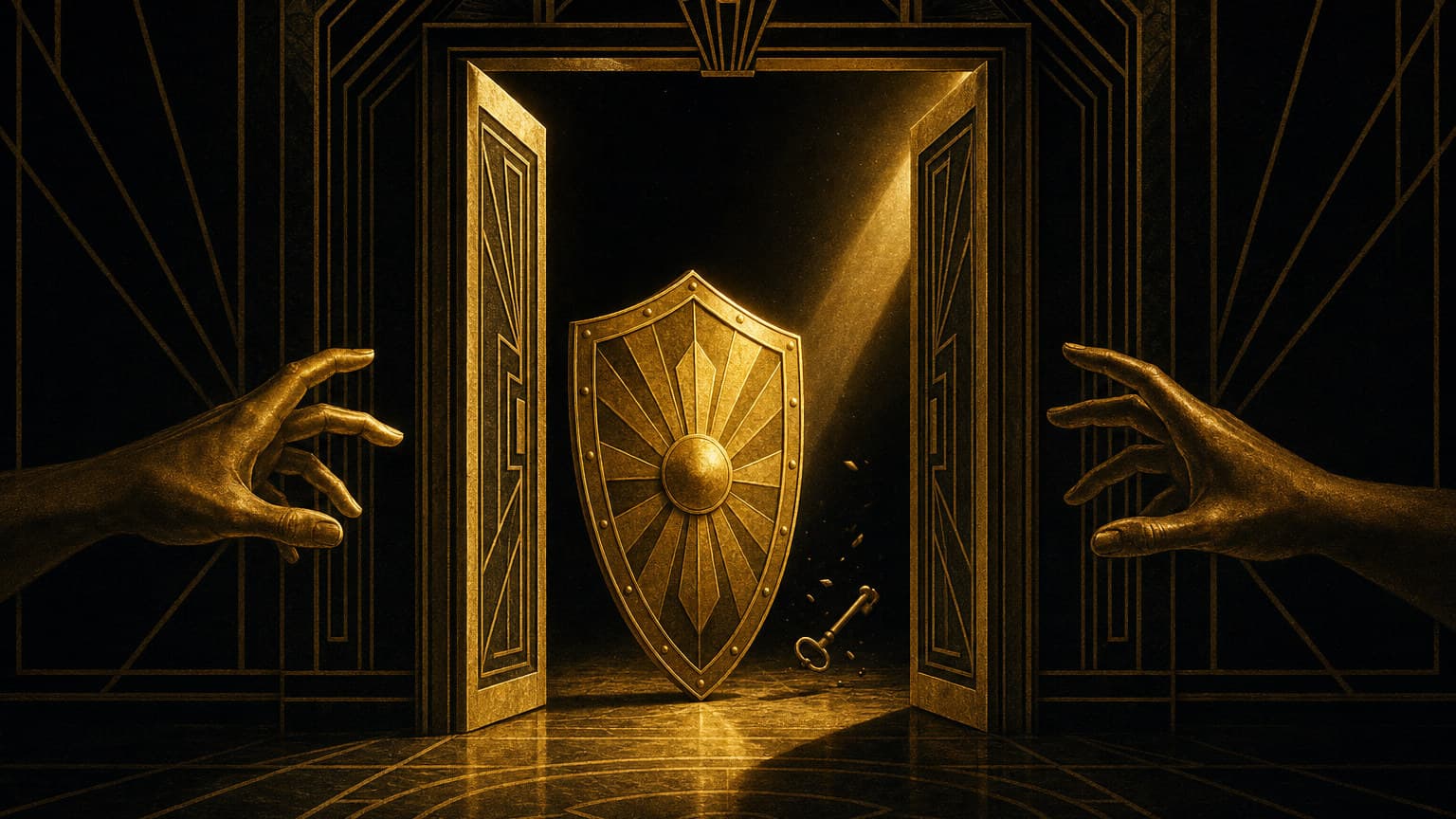
What's the difference between a broker and a guarantee? A broker gets paid once, for the introduction. A guarantee gets paid for as long as the job keeps running, because when something breaks, the guarantee is the one who turns up and fixes it. That's the real guarantee vs referral business question, and it's Law 15 of MIDDLEMAN, 7 x 7 = 48: Be the Guarantee, Not the Introduction. Get this one wrong and you'll spend your whole career making introductions for a finder's fee while somebody else builds the business you should have owned.
The introduction you forget by Tuesday
Most people's first move in the middle is a referral. You know a good plasterer, your mate needs a wall done, you put them together and take fifty quid for the trouble. Nothing wrong with starting there. But watch what happens the next time your mate needs plastering. He calls the plasterer direct, because he's got the number now and you added nothing to that second job. You were useful exactly once, and once is not a business.
What a guarantee sells that an introduction never can
A guarantee sells something else entirely: your name on the outcome. Not "here's a bloke who can plaster," but "if the plastering's wrong, you call me, not him, and I fix it." That one sentence turns a favour into a business, because it answers the question every customer actually has. Not "who can do this job" - "who do I ring if it goes wrong."
People will pay for an introduction once. They will pay for a guarantee for as long as they own the building.
Guarantee vs referral business: the money works differently
Run the two side by side and the arithmetic explains the whole thing. A referral fee is a single payment for a single act. You pointed, you got paid, and the relationship ends there whether the job goes well or badly, because you were never on the hook for the outcome either way.
A guarantee is a recurring payment for a standing risk. You carry the chance the job goes wrong, and because you carry it, the customer keeps paying you to keep carrying it. That's not a fee for an act. That's rent on a risk, and rent doesn't stop the day the job finishes.
Carrying the risk is the actual price of admission
Here's the part nobody mentions when they sell you on "just make introductions for a living." Standing behind a job costs you something. When a subbie messes up a job you guaranteed, you're the one on the phone at seven in the evening, you're the one paying to put it right, and you don't get to shrug and say "not my problem, I only made the introduction."
That cost is the entire reason a guarantee gets paid well and an introduction doesn't. Nothing that costs the seller nothing is worth much to the buyer. The risk you're carrying is the product.
An introduction is forgotten by Tuesday. A guarantee is remembered for life.
Three things a guarantee needs that an introduction never had
- Your name on the outcome, not just on the recommendation.
- A plan for when the job goes wrong, not just when it goes right.
- A price that reflects the risk you're carrying, not the minute it took you to make the call.
Miss any one of the three and you're not a guarantee. You're a broker who's hoping nothing breaks, and hope is not a business model.
Why most people never make the jump
Most people who make introductions for a living stay brokers forever, and it's not because they haven't noticed guarantees pay better. It's because a guarantee means answering for someone else's work. The plasterer's mistake becomes your phone call. The subbie who doesn't show becomes your Saturday. A broker never has that problem, because a broker was never actually responsible for anything in the first place.
That's the trade you're making when you move from introduction to guarantee. You give up the comfort of "not my problem" and you take the money that comes with being the one who answers for it. Most people look at that trade and back away, which is exactly why there's always room for the person who doesn't.
What this looks like inside a real trade business
I ran a maintenance company in London, working for housing associations and letting agents, with a network of subcontractors doing the physical work. I was never really selling plastering, or painting, or a boiler service. I was selling the fact that if any of it went wrong, the housing association called one number and it got put right, without them ever needing to know or care whose fault it was. That's not a referral. That's a guarantee, and it's the only reason they kept paying me instead of building their own list of tradesmen and cutting me straight out.
A worked example in one paragraph
A landlord needs a leak fixed. The referral version: you hand him a plumber's number, he pays the plumber direct, and you get nothing next time a pipe goes. The guarantee version: the landlord calls you, you send the plumber, the landlord pays you $220, you pay the plumber $150, and if the leak comes back inside a month you send someone round again at your own cost, because your name was on the first fix. The landlord never needs the plumber's number. That's the business Law 15 is describing, and the $70 is cheap at the price for never having that conversation about going direct.
Where to go next
Law 14, Your Margin Is Invisible, closes the second floor of MIDDLEMAN. Law 15 opens the third, and it's the harder one, because an introduction is a nice easy habit and a guarantee means answering the phone when you'd rather not. Read Law 15 in full, or walk the rest of the staircase at the 48 laws.
If you're building this in construction specifically, How Do You Stop Clients Going Direct to Your Subcontractor? covers the same guarantee from the angle of protecting it once you've built it, and What Is Construction Arbitrage? covers the wider discipline this law sits inside: own the customer, subcontract the work, keep the gap, carry the guarantee.
None of this gets taught on a trade course. It's passed down inside families who built a business on standing behind the risk instead of just pointing at it, and that's the whole subject of The Family Secret. Write me a letter to request entry.
Want the whole staircase?
Three books by Mohamed El Hadri. Start anywhere. Climb in order.