Can a Middleman Get Paid by Both Sides?

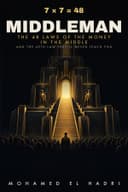
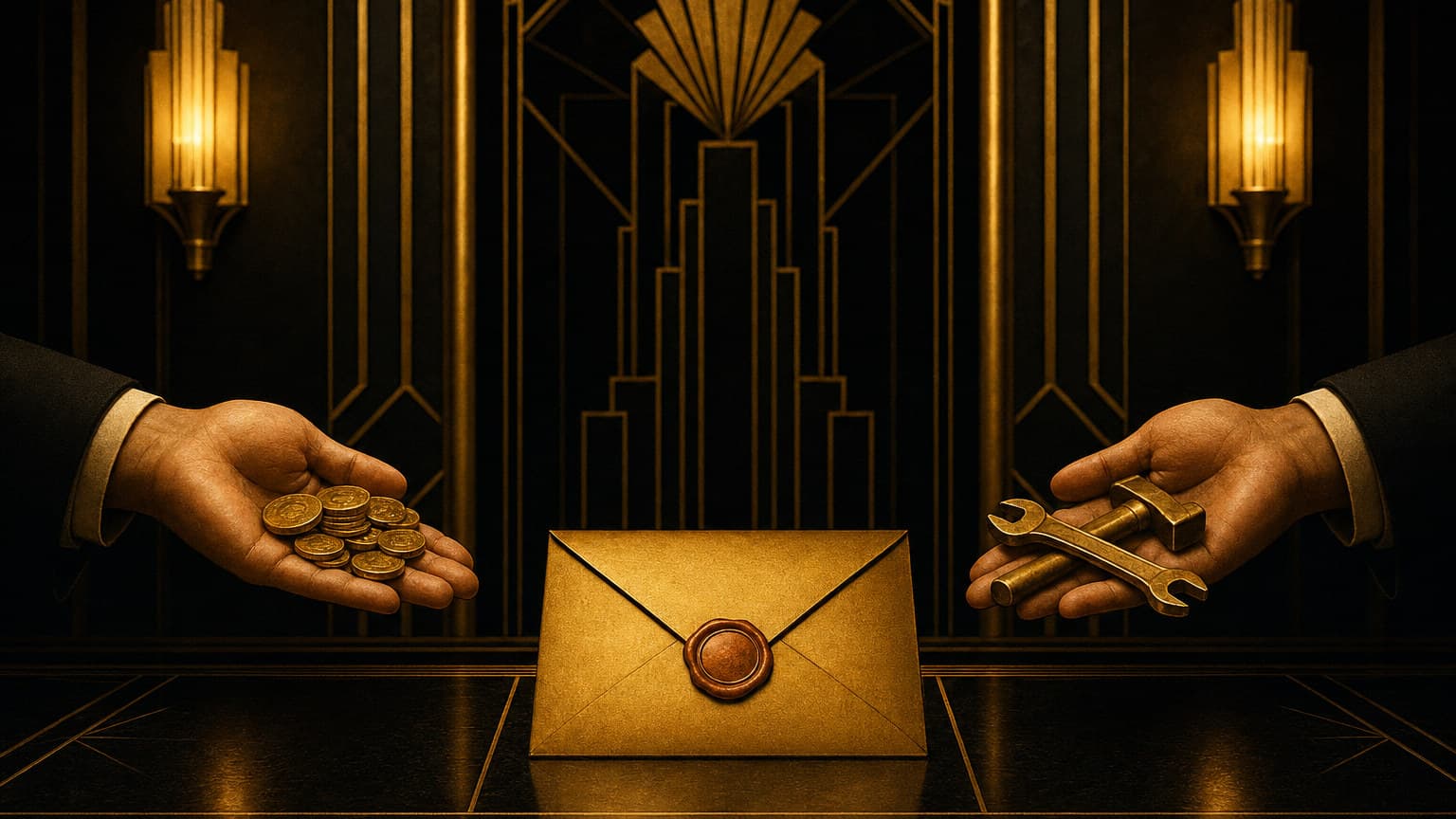
Yes. A middleman can get paid by both sides of the same deal. Not "get away with it." Not a loophole. The good ones are built to do exactly that, and nobody involved feels robbed. That's Law 13 in MIDDLEMAN, 7 x 7 = 48: Take From Both Sides. Most people hear "paid twice for one deal" and smell a scam. They're thinking like the hand, not the doorway.
Here's the question behind the question people are really asking: is it fair? And the honest answer is it depends entirely on whether both sides actually needed you.
The amateur charges one side and feels lucky
Watch someone new to the middle. They find a buyer, they find a supplier, they introduce the two, and they take a fee off one side only - usually the side that seemed easiest to charge. Then they spend the whole deal nervous that somebody's going to ask why they're owed anything at all.
That nervousness is the tell. They haven't worked out what they actually did for either side. They matched two people and hoped the favour was worth something. Hope isn't a fee structure.
The professional stands in the same spot and sees it differently. Two parties who couldn't easily find, trust, or transact with each other just got a solution, thanks to the one person standing between them. The buyer got the problem solved. The supplier got the work. Both are better off than they would have been alone. Both can pay for that, and neither one is being cheated, because without you, neither of them gets what they wanted.
Both sides win because of you, so both sides fund it
This isn't a trick of language. Look at who already runs the play in plain sight.
A recruiter is paid a fee by the employer. The candidate pays nothing, and still gets matched to a role they'd never have found scrolling job boards alone. Nobody calls that a free ride, because the recruiter earned it on the employer's side - sourced the candidate, screened them, and usually guarantees the placement for a trial period.
The amateur middleman charges one side and feels lucky to get it. The professional understands that both sides are getting something they couldn't get alone, and so both sides can fairly contribute to the cut.
A marketplace charges the seller a listing fee or a commission. The buyer pays nothing extra and gets a safer, faster way to find what they want than hunting classifieds. The seller pays for the footfall. The buyer pays, invisibly, in the price - and still comes out ahead of doing it alone. Same structure, different till.
An auction house charges the seller a commission for finding a buyer, guaranteeing payment, and handling the sale. It also charges the buyer a premium on top of the hammer price, for access to a vetted lot they'd have struggled to source and authenticate on their own. Both sides pay, because both sides got something neither could easily get alone. The structure repeats everywhere two parties need each other and struggle to find, trust, or transact with each other cleanly. That gap is exactly what the 48 laws are built to teach you to stand in.
The test that decides whether you deserve it
There's one question that separates a fair double collection from a dirty one, and it's not "how much did I charge." It's this: would either side be worse off without me?
If the answer is no for both sides, you're not taking from both sides. You're a tax on a transaction that would have happened anyway, and you'll get cut out the moment either side notices - which is exactly the trap in Law 21, add real value, or you're just a tax.
Run it on both sides before you charge either one:
- Would the buyer have found, trusted, or closed with this supplier without you? If not, that's a fee earned.
- Would the supplier have landed this buyer, this fast, without you? If not, that's a second fee earned.
Both yes, and you've earned a fee from each of them, each one smaller than the value you added on that side. That's the whole test.
Where this blows up
Greed is the only thing that breaks this. Tell the supplier you take no fee from them while secretly charging them one, or tell the buyer the price is the supplier's "best rate" when you've already padded it twice over, and you're not running Law 13 - you're running a con that ends the day someone compares notes. The two fees have to be honest ones, each earned on its own side, each small enough that the side paying it still comes out ahead of going direct.
That's also why Law 14 matters right next to this one: your margin is invisible. Nobody resents a price. They resent a number they can see and decide is unfair after the fact. Keep each side's fee clean, keep it smaller than the value delivered on that side, and the arrangement survives scrutiny because it deserves to.
A worked structure, not a trick
Take a plant hire marketplace matching contractors to idle machinery. The contractor pays a booking fee for a vetted, insured digger he didn't have to go and source himself. The machine's owner pays a smaller listing commission for keeping it earning between his own jobs instead of rusting in a yard. Neither fee exists without the marketplace standing in the middle. Pull it out, and the contractor's gambling on a stranger's kit off a WhatsApp group, and the owner's machine sits idle while he hunts for the next hire himself. Both sides are worse off. Both sides, quite reasonably, pay to avoid that.
That's the shape of every legitimate "paid by both sides" business: find where two parties genuinely need a referee, a matcher, or a guarantor, make sure your fee on each side is smaller than what that side is saving by using you, and stop worrying about whether it's fair. You already answered that the moment you checked.
Where to go next
This is one law out of forty-eight, and it only makes sense sitting next to the others - especially Law 9, never let the two sides shake hands without you, which is the only reason the two fees in Law 13 keep flowing instead of collapsing into one handshake that cuts you out. Read the full climb in MIDDLEMAN - 7 x 7 = 48: The 48 Laws of the Money in the Middle, $6.99 for the ePub and PDF, delivered the second you pay, with the first floor free by email if you want to test the water first.
Prefer it read to you on the drive to a job? THE EDGE covers the same money mechanics - the float, the payment law, how work actually moves through a building business - as a listening book on ElevenReader, first chapters free.
Stop feeling guilty about the second fee. Learn where it comes from. Start with MIDDLEMAN.
Want the whole staircase?
Three books by Mohamed El Hadri. Start anywhere. Climb in order.