What Does Never Build Your House on Rented Land Mean for a Business?
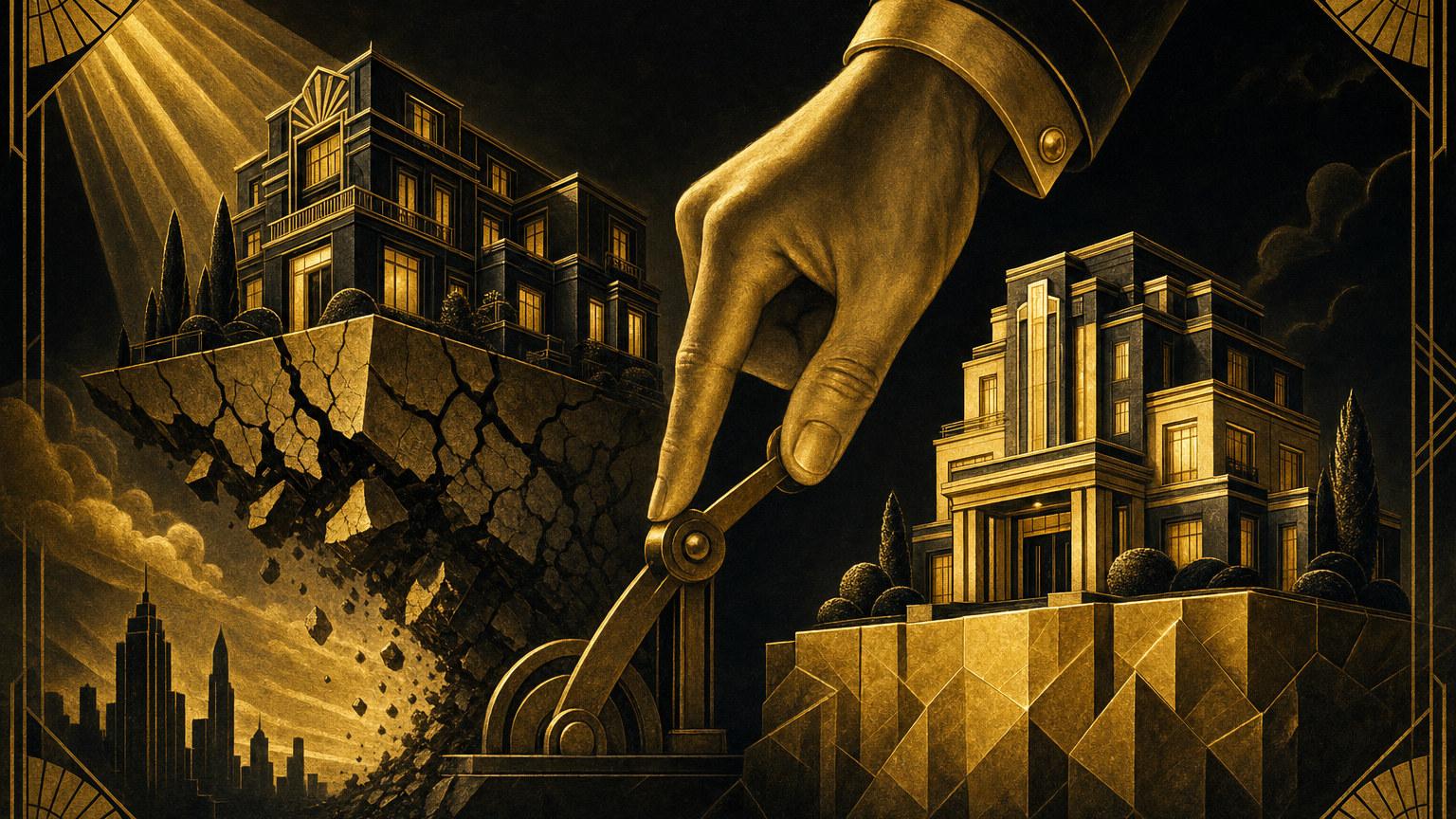
Building a business on someone else's platform is the quiet way most people go broke. They just don't find out for a few years. Never build your house on rented land means this: if someone else can switch off your customers with one policy change, you don't own a business. You own a tenancy, and the landlord hasn't raised the rent yet.
Everyone nods at that sentence and keeps doing it anyway. All the leads from one platform. All the followers on one account. All the bookings through one app. It feels like growth right up until the day it isn't, and the day it isn't always arrives without warning.
What rented land actually is
Rented land is any channel between you and your customer that you don't control. A lead-gen site. A social platform. A marketplace app. A directory that ranks you today and someone else tomorrow. None of it is evil. All of it is useful. The mistake isn't using it. The mistake is depending on it for survival.
Here's the test. Can the platform reach your customer without you? Can it reach you without the customer? If the answer to both is yes, you're not standing in the doorway. The platform is. You're just the one doing the work behind it.
The day the landlord changes the rules
You never see the rent rise coming, because the landlord never asks you first. An algorithm gets quietly rewritten and your reach halves overnight. A marketplace raises its take rate because it can. An account gets suspended over a flagged review and every customer in it disappears with it, and you never had their number to begin with.
None of that is a scandal. It's just what a landlord does with land he owns. He didn't lie to you. You just mistook a lease for a title deed.
The terms were never a secret either. They were in the agreement you clicked through without reading, the one that says the platform can change its rules whenever it wants and owes you nothing when it does. That's not small print hiding a trap. That's the landlord telling you plainly, in writing, that it's his land.
The middleman who builds on rented land is one policy change away from zero, no matter how big he got.
That's the whole risk in one line. Size doesn't protect you here. A business with a hundred jobs a month running entirely through one app is more exposed than a one-man band with forty names in his own phone, because the one-man band owns his forty and the bigger outfit owns none of its hundred.
What this looks like in the trades
A tradesman builds his whole book through one lead site. Every quote request, every job, every repeat customer comes through that one inbox. The moment his account there gets flagged, paused or priced out, his diary is empty and he has no way to reach a single one of the people he just did good work for.
Compare that to the man who keeps his own list. Same trade, same work, but every customer who's ever paid him sits in his own phone, under his own name, reachable without asking anyone's permission. The lead site can vanish tomorrow and he still has a business on Monday.
The difference isn't talent. It's who's holding the deed.
Same story outside construction. A barber builds every booking through one social account. A tutor runs every lesson through one app. A driver takes every fare through one platform's app and has never spoken to a passenger outside it. In every case the work is identical to the version where the business owns its own customer. Only the ownership is different, and ownership is the only part that survives a bad Tuesday.
Own your land: the list, the number, the name
Owning your land isn't complicated. It's three things, and none of them cost anything beyond the discipline to keep doing them.
- The customer's own contact. Not a platform inbox you read through their app. Their actual number, their actual email, saved by you, reachable by you, forever.
- A way to reach them that nobody else controls. A phone line, a mailing list, a WhatsApp broadcast. Something a platform cannot switch off because it was never theirs to switch off.
- The guarantee in your name, not the platform's. The customer trusts you, not the badge the app gave you. That trust travels with you if the app disappears tomorrow.
Use the platforms. Take the leads. Just never let a single one of them be the only road into your business. Law 9 - never let the two sides shake hands without you runs on the same logic from the other direction: control the relationship, and nobody, not the customer, not the supplier, not the platform in between, can cut you out of your own deal.
Signs you're already renting
Run your own business through these before you decide you're safe.
- If your biggest platform closed your account tomorrow, how many of your last ten customers could you actually call?
- Do you know the price a lead costs you there today versus a year ago, and is that price moving in your favour?
- If the platform changed its algorithm, would your business shrink, or would it barely notice?
- Whose name is on the guarantee the customer actually trusts - yours, or the app's?
Most people answer honestly and don't like what they hear. Good. That's the point of the question.
Law 23 and the staircase
This is Law 23 of MIDDLEMAN: "Never Build Your House on Rented Land." It sits on the fourth floor of the 48 laws, and it reads harder once you've watched a business built entirely on someone else's doorway get switched off in a day. Own your land, and a platform is a tool. Skip that step, and the platform owns you, whatever the contract says.
Where to go next
If you want the mechanics of how money actually moves through a trade business, including where leads come from and why some owners never sweat a platform change while others live in fear of one, that's the subject of THE EDGE. Twenty four chapters, first ones free, told as a listening book for anyone with a drive to site and nothing but time to fill.
Listen to THE EDGE on ElevenReader and hear the rest of it. First chapters free, then $4.99.
Own the land before you build on it. Listen to THE EDGE on ElevenReader and start tonight.
Want the whole staircase?
Three books by Mohamed El Hadri. Start anywhere. Climb in order.